
Should you choose a health plan with an HSA?
 By Aayush Goenka7 min read
I hope the past two weeks of market swings haven’t shaken you too much. The Nasdaq-100 has pulled back from its October high,1 but I’m holding the companies I still believe in and thinking in years.
Speaking of decisions that last longer than a few weeks, it’s open enrollment season for many of you in the US. Fall colors are showing up, and your employer may be explaining next year’s health plans.
Here’s my story and how I recommend thinking about it:
- The mistake: how confusing an FSA with an HSA cost me $2,400.
- The comparison: run a quiet year and a rough year through both plans, not just the deductible.
- The trap: your spouse’s FSA can block you from an HSA.
- The habit: why I pay medical bills with a card, keep the receipts, and leave the HSA invested.
My $2,400 mistake
When I first came to the US, I confused a flexible spending account (FSA) with a health savings account (HSA). I chose the FSA, thinking the money would fully roll over, and maxed it out for the year.
I left that employer later the same year and assumed my money was safe. It wasn’t. My unused balance had been forfeited.
Learning the difference cost me $2,400.
Here’s the difference I missed:
- FSA: use it or lose it, apart from a small carryover or grace period some employers allow. Leave the job, and unused money is usually gone.2
- HSA: the money is yours. It carries over every year, stays with you when you change jobs, and can be invested. You need an HSA-eligible health plan to contribute.3
For years I still used an FSA, but only put in what I was sure I’d spend. An HSA would have solved that, but my employer didn’t offer an HSA-eligible plan. The moment it did, in 2023, I switched. My medical costs were low, and I could leave the money invested instead of hunting for something to spend it on.
An HSA-eligible high-deductible plan is worth a serious look if you:
- are generally healthy
- don’t expect many medical bills
- could handle an unexpected one
1. Start with the care you need
First, ask one question: can I keep seeing my doctors? If a plan doesn’t cover your doctor, hospital, or prescriptions, it isn’t really cheaper.
The names don’t help. HMO and PPO tell you which doctors you can see. HDHP, a high-deductible health plan, tells you how much you pay before insurance helps. One plan can be both, so look for the words “HSA-eligible.”4
Then add up a whole year: what comes out of your paycheck (the premium), plus the bills you expect to pay, minus anything your employer puts in your HSA. Employers usually pay most of the premium, and on some HSA plans your share is $0.5
Here’s a made-up example for one person:
| HSA plan | Lower-deductible plan | |
|---|---|---|
| Premiums for the year | $1,200 | $2,400 |
| Bills you pay before insurance helps | $1,750 | $500 |
| After that, you pay | 20% | 20% |
| Most you’d pay for bills in a year | $8,700 | $3,000 |
| Employer adds to your HSA | $1,000 | $0 |
- A quiet year, $1,000 of bills: the HSA plan costs $1,200 and the other plan $3,000. The HSA plan wins by $1,800.
- A rough year, $30,000 of bills: the HSA plan costs $7,600 and the other plan $5,400. The other plan wins by $2,200.
So the HSA plan wins quiet years, and the other plan wins rough ones. If you see a doctor regularly or take a monthly prescription, expect more rough years, and the lower-deductible plan may make more sense. That maximum also doesn’t cover premiums or out-of-network care.6
Before you pick, check:
- Does the plan cover your doctors?
- What does a normal year cost in total?
- What does a bad year cost?
- Could you pay a big bill early, before the HSA builds up?
2. If you pick the HSA plan
Here’s why I liked it. An HSA dodges federal tax three times:3
- The money goes in before income tax.
- It grows tax-free while it’s invested.
- It comes out tax-free when you spend it on medical bills.
Some states, including California where I live, still tax it.7
For 2027, you can put in up to $4,500 for just you or $9,000 for a family, counting what your employer adds ($1,000 more at 55 or older).8
You can spend the HSA on medical bills right away. I don’t. Here’s what I do instead:
- Pay medical bills with a 3% cash-back card.
- Pay the card off in full.
- Save the receipt digitally.
- Leave the HSA invested.
- Pay myself back later.
There’s no deadline to pay yourself back. Years from now, I can take out money for a bill I paid today, as long as I already had the HSA when I got the care, and I haven’t been paid back for it or deducted it on my taxes.9 That’s why I keep the receipts.
My contributions from 2023 and 2024 have grown to roughly four times what went in. Some good investments and luck helped. I wouldn’t plan on repeating that, since returns aren’t guaranteed and investments can lose value.
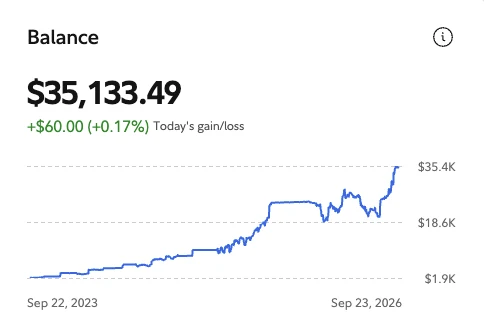
I want ours available for medical bills later in life. Like with the market, I’m thinking in years.
That only works if the money is actually invested, and a lot of HSA money just sits in cash. Only 11% of HSA accounts held any investments at midyear 2026, according to Devenir, a firm that tracks HSAs.10 If you’ll need the cash for bills soon, that’s fine. If you won’t, log in and check.
Some HSA providers make you keep some cash first, about $2,000 at Optum, for example.11 If yours makes investing hard, you can usually move the money to another HSA provider and keep the work account open for paycheck deposits.3
3. If you and your spouse prefer different plans
This one surprised us after we got married. If you’re married, check what each of you is signing up for. A regular FSA can pay your spouse’s medical bills too. That alone can stop your spouse from putting money into an HSA, even if they picked an HSA plan at their own job.12
The workaround:
- One of you takes the lower-deductible plan and skips the regular FSA. A dental-and-vision-only FSA is fine.
- The other takes the HSA plan, stays off the first person’s plan, and puts money in the HSA.
That HSA can still pay medical bills for both of you, and for your kids if they count as your dependents. How much you can put in depends only on the HSA spouse’s own plan.3
Why we eventually changed plans
A facility we wanted to use was on another carrier’s network. After we got married, the plan also had to work for both of us. A different health plan fit our household better, so we switched. I stopped contributing to the HSA, but kept the money invested.
I liked the HSA. But we wanted access to that facility more.
That’s why I’d start with the care you need.
If you want more, I wrote up how we use the HSA and keep the receipts on my website, including the married-couple trap and what California taxes.
Which part of this year’s choice is hardest for you: the network, the deductible, or the HSA rules?
Sources
- 1OANDA. Nasdaq 100 Chart of the Week, October 19, 2026
- 2HealthCare.gov. Using a Flexible Spending Account (FSA)
- 3IRS. Publication 969: Health Savings Accounts and Other Tax-Favored Health Plans
- 4HealthCare.gov. Health insurance plan and network types
- 5KFF. 2025 Employer Health Benefits Survey
- 6CMS. Medical bill rights: terms you should know
- 7California Franchise Tax Board. 2025 Schedule CA (540) instructions
- 8IRS. Revenue Procedure 2026-24 (2027 HSA and HDHP limits)
- 9IRS. Notice 2004-50, Q&A 39
- 10Devenir. HSA assets reach nearly $192 billion at midyear 2026
- 11Optum Bank. HSA investment services
- 12IRS. Revenue Ruling 2004-45
All sources checked October 24, 2026.