
Where I Keep My Emergency Fund: 11 Months in SGOV

Summary
- I keep one month of expenses in the bank and eleven months in SGOV for a one-year runway.
- SGOV adds Treasury yield, but carries price, settlement, and transfer risk.
- Choose a reserve that prevents forced selling while keeping near-term cash accessible.
I keep the next month’s expenses in my bank account and the other eleven months in SGOV, an exchange-traded fund of short-term Treasury bills, in my brokerage account. That reserve has one job: keep the next year of expenses in a safe harbor that earns interest while it waits.
One year is my comfort level, not a rule I think everyone should follow. Six months might feel fine with a recurring paycheck or another reliable income. I no longer have either, and I wanted enough set aside that a bad year in the market would not force me to sell long-term investments to fund regular spending. I could size it because I had spent years tracking what my life actually cost.
The year also covers expenses no monthly budget predicts. When pet insurance excluded our kitten’s emergency during its waiting period, the cash reserve absorbed a $10,000 vet bill. And it helps me sleep, which matters more to me than squeezing every possible dollar out of this part of my portfolio.
One month in the bank, eleven months in SGOV
SGOV holds U.S. Treasury bills with maturities of three months or less. I chose it because I can buy and sell it easily in the brokerage account I already use.
When a new month is coming up, I sell enough SGOV to cover that month’s budget and transfer the proceeds to my bank. This is liquid enough for a planned monthly transfer. It is not a replacement for money I may need immediately.
ETF sales depend on trading days and settlement. The transfer to my bank takes additional time. Robinhood currently says U.S. stock and ETF trades settle one trading day after the trade.1 That is why the upcoming month stays in the bank from the start.
SGOV vs. a high-yield savings account, after California tax
SGOV pays about 4.01% a year as of October 9, 2026: the average yield on the T-bills it holds, less its 0.09% expense ratio. iShares’ reported 30-day SEC yield,2 which looks back a month, was 3.72% as of October 9, 2026. These figures update as rates and the fund’s reports change.
Source note: the yield averages the 4-week and 3-month T-bill yields as of October 9, 2026, less the 0.09% expense ratio. The state-tax-equivalent uses California’s 2026 top marginal rate of 13.3%, before federal tax, and treats all of SGOV’s income as state-exempt, though about 95% qualified in 2025.
That yield changes with short-term Treasury rates, so I check it again whenever I compare SGOV with a high-yield savings account. A bank usually advertises an APY, while an ETF’s yield has to be estimated from what it holds or read from its backward-looking SEC yield. I use the numbers as a starting point, not as a perfect apples-to-apples comparison.
Living in California adds another consideration. Income attributable to U.S. Treasury obligations is generally exempt from state and local income taxes. At California’s top marginal rate of 13.3%, a 4.01% state-tax-exempt yield is equivalent to about 4.63% from a fully state-taxable account before considering federal taxes:
4.01% / (1 - 0.133) = 4.63%
The actual state exemption depends on how much of the fund’s income came from qualifying government obligations and whether the fund meets California’s requirements. I use the fund’s tax supplement when filing rather than assuming the full distribution qualifies. BlackRock explains the potential Treasury tax advantage here,3 and California explains its fund rules here.4
A few tenths of a percentage point will not change my financial plan. But this is money I intend to hold anyway, so the after-tax difference is worth checking.
Whether SGOV beats a savings account depends on your state, your income, and your bank’s rate. Is SGOV better than a HYSA? walks through it state by state, and the calculator shows the numbers for your own bank:
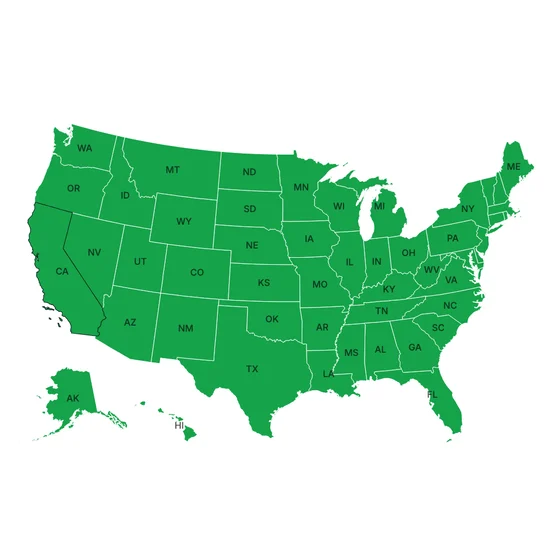
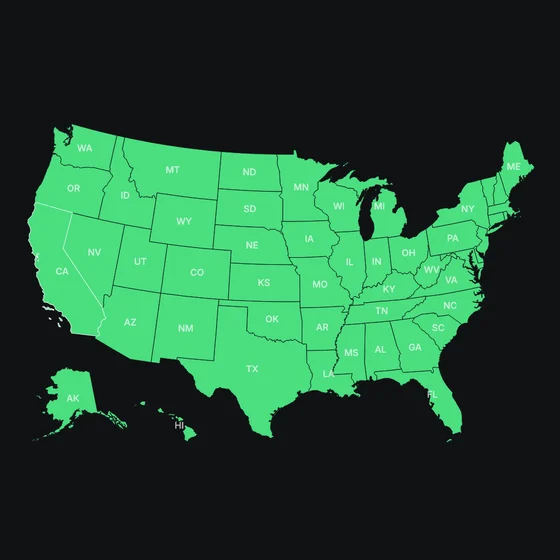
A higher advertised rate needs one more check before it holds a reserve: how fast you can get the money out. X Money’s 6% against SGOV is where I worked through that.
What I give up
SGOV is an ETF. It is not insured by the FDIC,5 and its market price can move. I also have to sell shares and transfer the proceeds before I can spend the money.
I am comfortable with those tradeoffs because the next month’s expenses are already in my bank. Someone who values deposit insurance or immediate access more highly may make a different choice.
The useful part of my setup is the order in which I made the decisions. I first chose the runway that would let me sleep through a bad market. I kept the amount I need immediately in the bank. SGOV became the place for the remainder after I compared access, risk, and after-tax yield.
That runway also gives me room when reality differs from a spreadsheet, as it did when my spending changed after I left work.
This is how I manage my own reserve. It is not a recommendation for someone else’s emergency fund or portfolio.