
Options Trading for Beginners: Lessons From My First Trades

Summary
- My first options profit taught me confidence before I understood the product, and later trades exposed the gap.
- Option prices depend on more than stock direction, and a displayed profit may be impossible to realize in an illiquid contract.
- Start small, understand the pricing inputs, use liquid contracts, and accept every obligation before trading.
Your first options win can teach you the wrong lesson. Here are four things I wish I had understood before mine.
I made a small fortune on my first options trade.
Twenty-three dollars.
In August 2018, I paid $51 for a SNAP put and sold it ten days later for $74. I barely knew what I was doing, but I had made money. That felt exciting.
Then I lost money on several trades. I could guess where a stock might move, but I did not understand why an option could still lose value. Later, I saw a profit in the app that I could not take at the price shown.
Luck can only take you so far.
If you are curious about options, start with these four checks before worrying about strategies.
If calls, puts, premiums, and assignment are still unfamiliar, start with my plain-English explanation of how an options contract works.
My first $23
An option is a contract tied to a stock. I bought a put, which gave me the right to sell SNAP shares at a fixed price, called the strike price, before the contract expired.
I paid $51 for that contract. That payment is called the premium. I sold the contract before expiration for $74, so the gain was $23 before fees and taxes.
See the original buy and sell confirmations
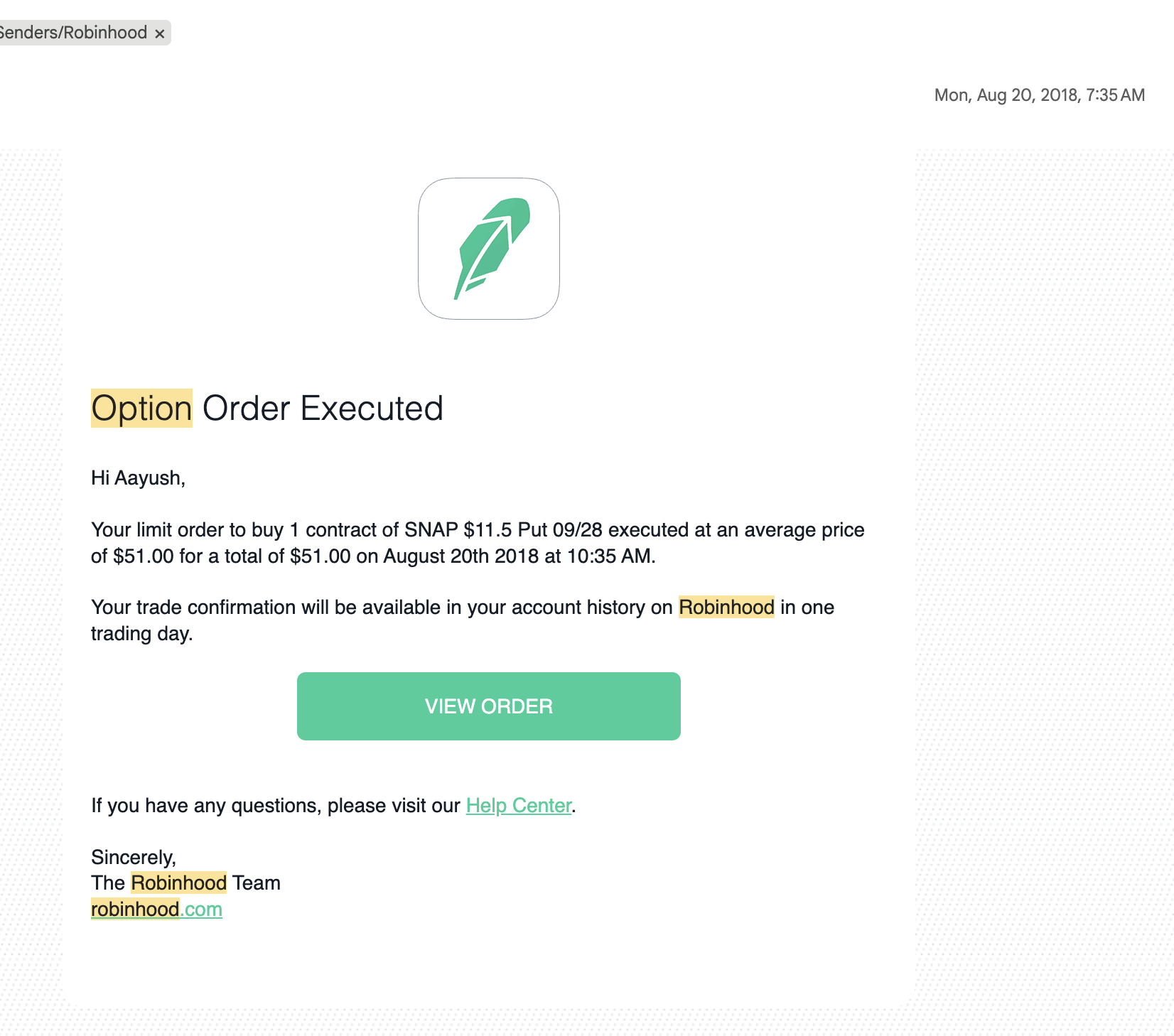
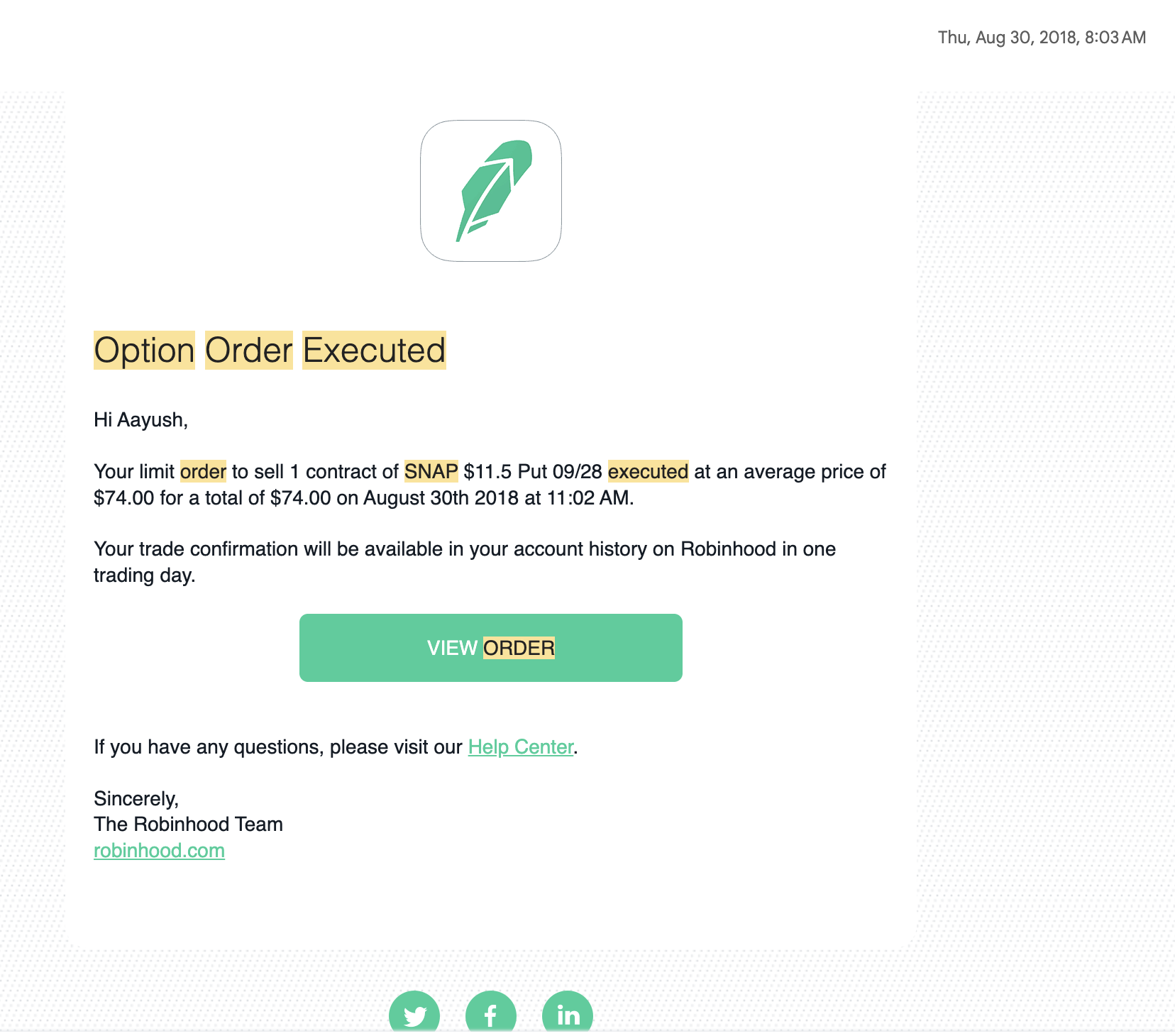
The $51 premium could have been lost entirely. The emails prove that the trade made money. They do not prove that I understood why.
The first trade’s risk and payoff, in numbers
One standard contract covers 100 shares. I paid $0.51 per share, or $51 total. My maximum loss on the put itself was that $51. At expiration, the trade would have broken even at $10.99 per share. Its theoretical maximum gain was $1,099 if SNAP fell to zero. I did not hold it that long. I sold the contract for a $23 gain instead.
The Options Industry Council’s long-put guide1 explains the full payoff. These numbers exclude fees and taxes and are not a suggested trade.
When the easy money stopped looking easy
The losing streak
After the early win came a losing streak. A hunch about whether a stock would rise or fall was not enough. An option’s price also changes with time and with how much traders expect the stock to swing.
I got frustrated and started looking for a different approach. I found Pandrea Money on YouTube and watched a simple explanation of selling options, especially cash-secured puts. It sounded much more consistent.
Honestly, it felt like free money.
The trade I set up carefully
I set aside roughly $1,000 to learn and accepted that I could lose it. Then I spent about six weeks reading, watching videos, and following option prices in Robinhood before making the next trade.
I eventually sold a cash-secured put on a low-priced stock. I think it was SNAP again, but I do not have the record to confirm that.
The part I had missed
Here is the basic deal: the seller receives a premium but agrees to buy 100 shares at the strike price if assigned. Assignment means the contract is exercised and the seller must complete that purchase. A put with a $10 strike therefore requires $1,000 to buy the shares.
Within roughly a week, the app showed about a 50% gain on the option premium. That was not a 50% return on the $1,000 set aside, and it was not yet cash in my account.
I tried to buy the put back and close the trade. My order would not fill at the price I wanted.
There was very little trading activity in that particular contract. I held it for a few more weeks, got nervous about expiration, and eventually closed with almost no gain or loss.
That trade taught me more than the first win did.
Four options trading rules for beginners
1. Start small enough to survive being wrong
My $1,000 was a learning budget, not a recommended starting amount. Before opening a trade, know the most you could lose and whether the contract could require you to buy shares. If one contract is already too large, keep studying or practice with a simulated trade.
Money needed for bills or emergencies has another job. If you are still deciding how much to keep liquid, start there before putting money at risk.
2. Learn what changes the price
Options have a set of measures called the Greeks. You do not need to memorize formulas on day one, but you do need to understand what they describe: the stock’s movement, time passing, and changes in how much traders expect the stock to swing.
That is why getting the stock’s direction right does not guarantee a profitable option trade.
3. Check whether you can get out
Liquidity is how easily you can trade without accepting a much worse price. Before entering, look at the actual contract’s bid and ask. The spread between them shows the gap between what buyers are offering and sellers are asking.
Volume can help, but it does not guarantee that your order will fill. OIC explains why.2 My mistake was looking at the profit on screen before checking whether I could close at that price.
4. Sell puts only on companies you are willing to own
This is the most important rule I learned later. A juicy premium is not enough reason to sell a cash-secured put.
Be willing and able to buy 100 shares at the strike price. Then ask what happens if the stock falls much further. Cash secures the purchase, but it does not protect that cash from loss. OIC explains the downside here.3
What I know now
Today I both buy options, such as LEAPS calls, and sell them, such as cash-secured puts, but I am far more deliberate about the risk. Options are not necessary for everyone. Staying out is a good decision when you cannot explain the trade or afford its downside.
Before placing one, try answering four questions in plain English:
- What could make this option lose value?
- What is the most I could lose?
- Can I close it at a reasonable price?
- What happens if I am assigned?
Write the answers down before the trade. As I learned from tracking my expenses, a record is much harder to rewrite after the outcome is known.
I could not have answered those questions properly when I made my first $23.
Where it began: the Robinhood invitation emails
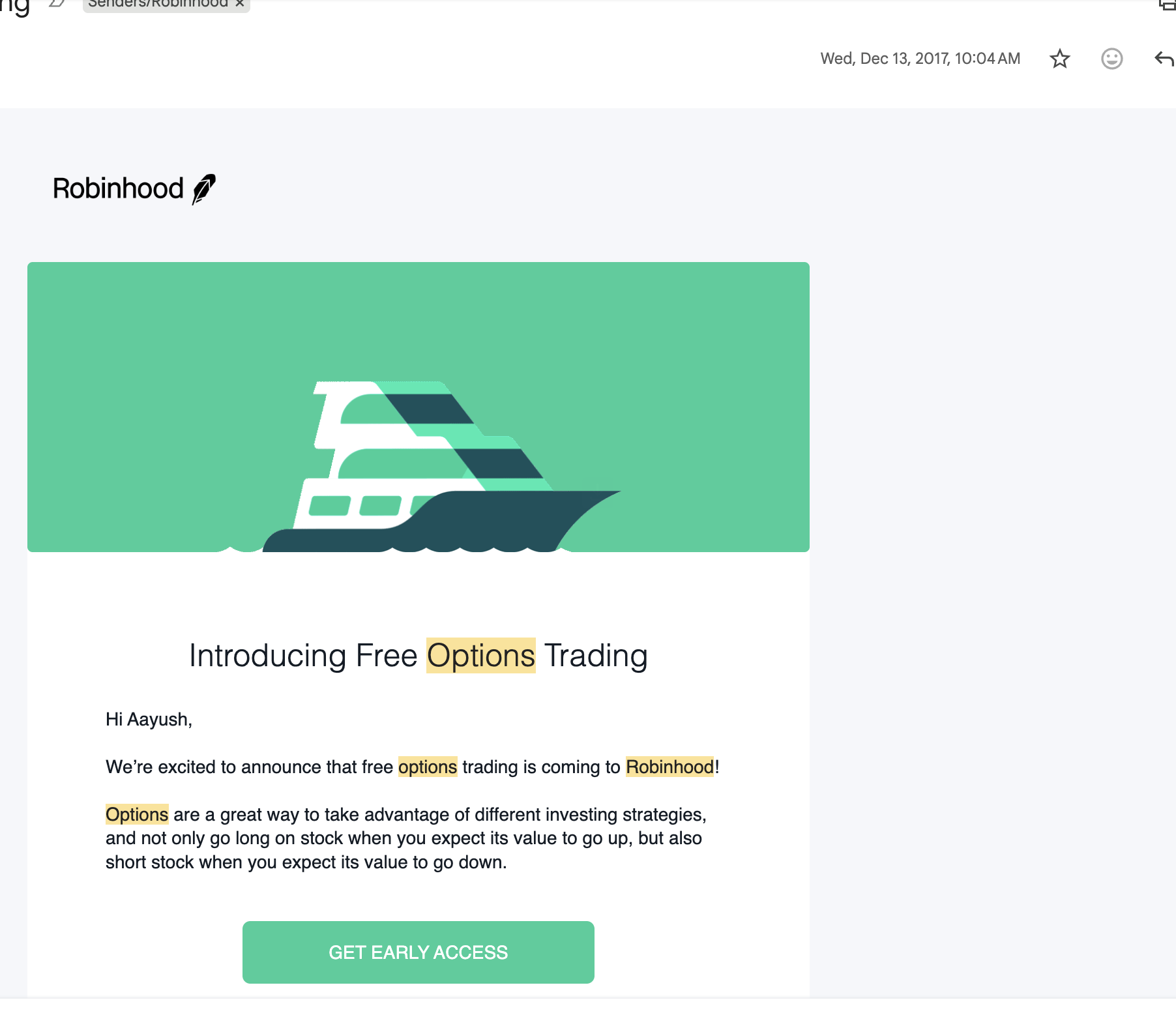
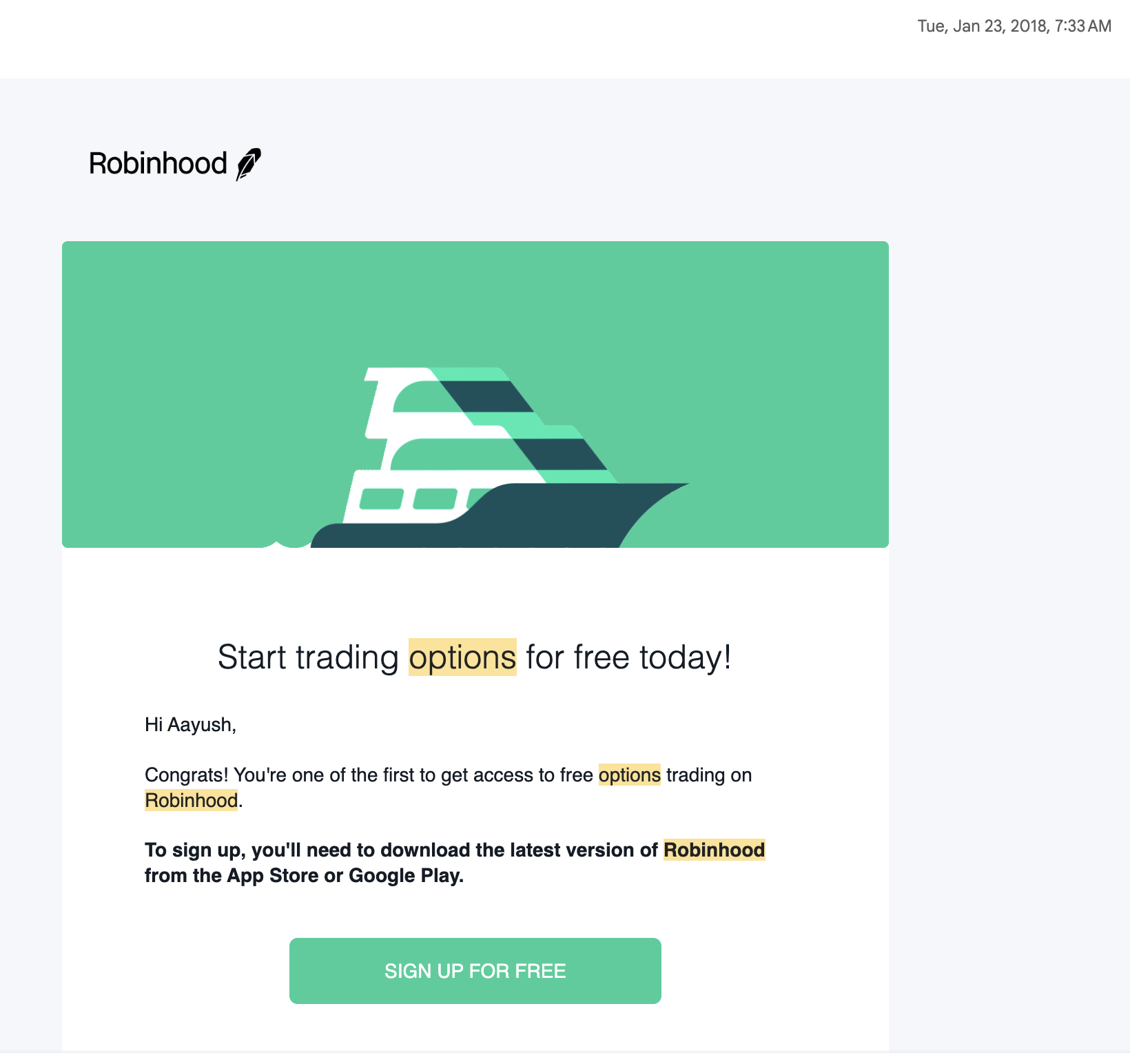
Robinhood announced options trading in December 2017.4 My invitation arrived on December 13, followed by access on January 23, 2018. These are the original screenshots from my inbox.
Sources
- 1Options Industry Council. Long put
- 2Options Industry Council. General information FAQ
- 3Options Industry Council. Cash-secured put
- 4Robinhood. Introducing options trading
All sources checked September 16, 2026.